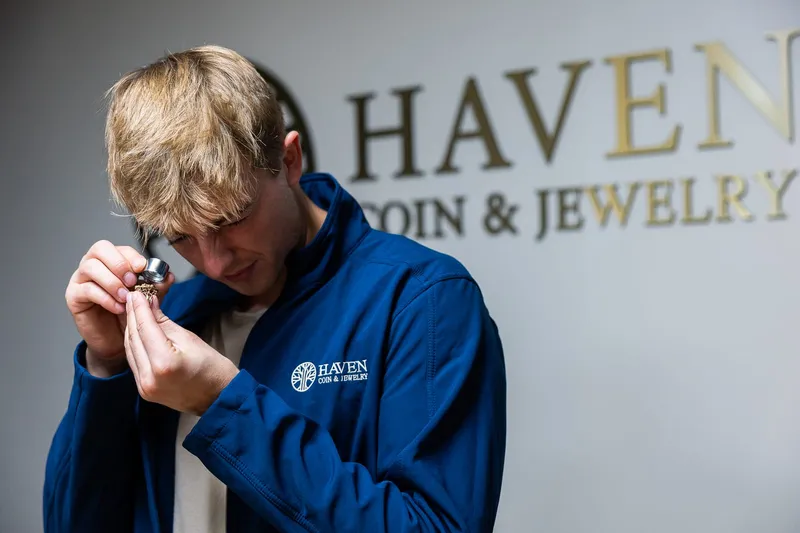

Know What Is Being Valued Before You Accept
A family estate can mix an 18k bracelet, a platinum wedding set, an old watch, and pieces that only look like gold. One total without an explanation makes those differences difficult to understand. At Haven, we work through the items in your presence and explain the metal, the weight used, and any other characteristics that affect the offer.
There are estate jewelers and buying options throughout Fairfield County. Our reason for the drive is a transparent evaluation by a licensed, insured, buy-only business. We are not trying to stock a sales case or persuade you to exchange inherited jewelry for another purchase. A signed or intact piece is considered on its merits, including potential value above its metal, without promising that a name alone guarantees a premium.
Bring documentation if it survives, but do not dismantle settings or watch cases before visiting. Let us know which pieces are not available for sale and who needs to review the offer. For a small item, a preliminary call may save an unnecessary trip. For a larger estate, an appointment allows enough time to explain the different categories and answer the family’s questions.

How We Evaluate Jewelry, Watches, and Precious Metal
Testing different karats
We examine marks such as 14k, 18k, and 750, then test the material rather than relying on a stamp alone. An estate may include several purities and pieces with different construction. Each needs an appropriate explanation, particularly when repairs or replacement components complicate the picture. We identify what is actually being evaluated and discuss any testing concerns before proceeding. Neither an item’s color nor a previous owner’s description is enough to establish its gold content.
Weight and the market reference
The weight of a whole object is not necessarily the weight of its precious metal. Stones, watch movements, and other components need to be distinguished from the material being purchased. We explain the relevant weight and purity, then use the current metal market as a reference for the offer. Buying costs and the item itself also matter, so the quoted spot price should not be mistaken for a guaranteed payout on every gram of jewelry.
Signed jewelry and wearable pieces
Designer signatures, workmanship, condition, and market demand can be relevant beyond melt value. We evaluate those characteristics where applicable and explain whether they affect our purchase offer. Some signed pieces have additional value; others do not command the premium their owner expects. An insurance replacement appraisal answers a different question from what a buyer will pay today. Bring it for context without assuming that its stated amount will become the sale price.
Broken jewelry and dental gold
Broken chains, damaged rings, single earrings, and other incomplete items can still contain precious metal. We do not require a piece to be wearable before considering it. Dental gold is assessed according to the actual alloy rather than its yellow appearance. Keep loose fragments in a separate container if possible and tell us what you know about them. Plated or filled items are identified honestly rather than quoted as if they were solid gold throughout.
Gold watches, coins, and bars
A watch needs a distinction between its case, movement, bracelet, and other parts. Solid-gold, gold-filled, and plated cases do not have equivalent metal content. Leave the watch intact for the visit so its construction can be assessed without unnecessary damage. Bullion coins and bars require checks of authenticity, weight, and fineness; collectible coins may raise a separate premium question. Keep receipts or original packaging with them when available, but packaging itself is not proof of authenticity.
Platinum and silver
Platinum jewelry is evaluated against its own purity and market, independently of gold. Sterling services and hollowware can be included with estate jewelry; we distinguish silver plate and account for weighted bases, handles, or other non-silver components. A full flatware service may need more time than a few rings. Mention its size when booking so the review can include both metal content and any relevant pattern or collectible interest.
Connecticut’s licensed precious-metals dealers must use a check or money order for payment, and Haven issues checks. If you accept our offer, your check is provided that day; holding requirements for covered items concern our subsequent handling, not a delay in paying you.
Directions from Fairfield
Two routes from Fairfield to our Hamden shop at 2285 Whitney Ave.
Via I-95 and the Milford Parkway
Join I-95 north from Fairfield. Take exit 38 onto the Milford Parkway, then connect to Route 15 north. Use exit 51 for Whitney Avenue in Hamden and continue to 2285 Whitney Ave. Our shop is at the rear of the light blue building, where you will see our sign and parking.
Via the Merritt and Wilbur Cross parkways
An alternative uses I-95 north to exit 27A for Routes 25/8 north. Continue on Route 8 north, then take exit 6 onto Route 15 north, the Merritt Parkway, continuing to the Wilbur Cross Parkway. Use exit 51 for Whitney Avenue in Hamden. Maps showed about 39–40 minutes for these two options from central Fairfield; your neighborhood and traffic can change the journey.

Our Address
2285 Whitney Ave, Hamden, CT 06518
About 40 min from Fairfield
Questions About Selling Gold from Fairfield
Straight answers to the questions we hear most from Fairfield residents.
Helpful Resources
Everything you need to know before your visit from Fairfield.
Selling Gold Jewelry
Understand the testing, weighing, and offer process at our Hamden shop.
Learn moreWhat We Buy
The coins, jewelry, bullion, and sterling we can evaluate together.
Learn moreFree Evaluations
Arrange time to review estate belongings without an obligation to sell.
Learn moreGold Karat Value
How different purities change the amount of gold in jewelry.
Learn moreGold Spot Price Explained
Understand the market reference behind a precious-metal offer.
Learn moreEstate Jewelry in Connecticut
Questions to consider before selling inherited jewelry.
Learn moreJewelry Hallmarks Guide
Reading marks as identification clues while recognizing the need for testing.
Learn more