
What Is Palladium Bullion? Value, Coins & Bars | Haven Coin
 By Matt Pavia · 2026-09-01 · 5 min read
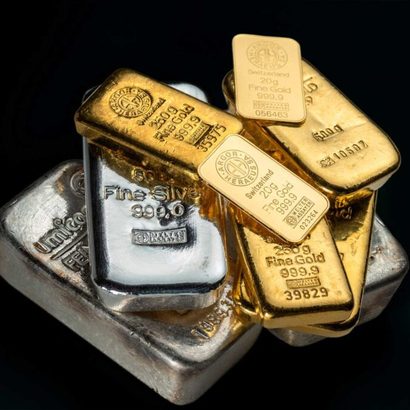
What is Palladium Bullion?
What is Palladium?
Palladium is a rare, silvery-white metallic element, first discovered in 1803. It belongs to a small family of six metals known as the platinum group metals, which also includes platinum, rhodium, ruthenium, iridium, and osmium. Despite looking similar to silver or white gold at a glance, palladium is significantly rarer and, for a stretch between roughly 2019 and early 2023, traded at a higher price per ounce than gold, though it has since fallen well below gold. Its rarity comes down to geology: unlike gold, which is mined in dozens of countries, palladium is concentrated in only a few major deposits worldwide, and a large share of global supply comes as a byproduct of mining other metals rather than being mined on its own. For a beginner, the simplest way to think about palladium is as a precious metal whose price is driven less by jewelry and investment demand, and more by heavy industrial use.
What is Palladium Bullion?
Palladium bullion refers to palladium refined to investment-grade purity, usually .9995 fine, and cast or minted into standardized bars, rounds, or coins. Like gold and silver bullion, its value comes almost entirely from its weight and purity rather than any collectible or design premium.
Palladium bullion is less common and less widely traded than gold or silver bullion, in part because the market for it is smaller and historically more volatile. Fewer refiners and mints regularly produce palladium bars and coins compared to gold and silver, and the products that do exist tend to carry a somewhat higher dealer premium as a result of lower production volume and thinner liquidity. For investors specifically interested in precious metals tied more to industrial demand, palladium bullion offers a more direct, if less common, way to gain that exposure compared to buying shares in a mining company or an industrial metals fund.

How is Palladium Priced?
Like gold, silver, and platinum, palladium is priced by its spot price, which is the current market rate for one troy ounce of the metal. As of late August 2026, palladium has been trading in the range of roughly $1,400 to $1,450 per troy ounce, though the metal has a long history of significant price swings.
Palladium's price history is unusually volatile compared to other precious metals. It traded at or below roughly $100 per ounce through much of the early 1990s and, at the opposite extreme, reached an all-time high above $3,000 per ounce in March 2022 during a severe supply shortage. This volatility is largely because palladium demand is concentrated in a single major industrial use, which means its price reacts sharply to shifts in that one market. On the other hand, gold’s price is influenced by a broader mix of investment, jewelry, and industrial demand spread across many uses.
Where is Palladium Found?
Palladium is one of the rarest metals mined at industrial scale, and its supply is highly concentrated in just a few regions of the world. Russia and South Africa together account for the large majority of global mine production, with Russia's Norilsk-Talnakh deposits and South Africa's Bushveld Complex representing two of the most significant palladium-bearing formations on Earth.
Outside of these two dominant sources, smaller but meaningful amounts of palladium come from North America, particularly in Montana and Ontario, Canada. A distinctive feature of palladium mining is that it's rarely the primary target of a mining operation. Most palladium is recovered as a byproduct of mining nickel or platinum, meaning its supply is partly tied to demand for those other metals rather than palladium demand alone. This geographic concentration and byproduct sourcing are part of why palladium supply can be disrupted relatively easily by geopolitical events or mining slowdowns in just one or two countries.
What is Palladium Used For?
The dominant use for palladium, by a wide margin, is automotive catalytic converters, which use the metal to help convert harmful engine exhaust gases into less toxic emissions. This single application accounts for the large majority of global palladium demand, particularly in gasoline-powered vehicles, which is why palladium prices are closely tied to global auto production and emissions regulations.
Beyond the automotive industry, palladium is used in electronics manufacturing, particularly in multi-layer ceramic capacitors found in smartphones and other devices, as well as in dentistry for crowns and fillings, and in jewelry, where it's sometimes alloyed with gold to create certain types of white gold. This heavy concentration in industrial and automotive use is the single biggest factor that separates palladium's price behavior from gold and silver.
Is Palladium a Good Investment?
Palladium can be a reasonable way to diversify a precious metals portfolio, but it carries meaningfully different risks than gold or silver. Because such a large share of its demand comes from a single industrial use, its price is more directly exposed to swings in global auto manufacturing and environmental regulation.
This concentrated demand base is part of why palladium has swung dramatically over the past few decades. That volatility can create opportunity for investors comfortable with risk, but it also means palladium is generally considered a more speculative holding than gold, which has a broader, more stable base of demand. Palladium bullion also tends to be less liquid and carry higher dealer premiums than gold or silver, since fewer buyers and sellers are active in the market. For most beginners, palladium is better suited as a smaller, diversifying position alongside gold and silver rather than a primary holding.
What Palladium Coins Exist?
The most widely recognized palladium bullion coin is the Canadian Palladium Maple Leaf, minted by the Royal Canadian Mint in 1-ounce sizes with a .9995 fine purity, first issued in 2005 and reintroduced as a regular product in more recent years. The United States Mint also produces the American Palladium Eagle, a 1-ounce bullion coin first released in 2017, featuring designs adapted from Adolph Weinman's early-1900s work, including the Liberty from his 1916 Mercury dime.
Compared to gold and silver, the range of palladium coins is much narrower, since fewer mints regularly strike palladium products and overall investor demand for the metal in coin form is smaller. Older or historical palladium coins, such as the Isle of Man Noble series minted in the 1980s, are no longer in regular production but occasionally appear on the secondary market. For a beginner interested in palladium coins, the Canadian Maple Leaf and American Eagle are the two most recognizable, most liquid options available today.
What Palladium Bars Exist?
Palladium bars are less common than gold or silver bars, but several major refiners do produce them. Well-known refiners producing palladium bars include PAMP Suisse, Credit Suisse, Baird & Co., and Valcambi, generally at the .9995 fine purity investment-grade standard for palladium.
Because the palladium bar market is smaller than gold or silver, selection tends to be more limited, and premiums over spot price are often somewhat higher due to lower production volume and thinner trading liquidity. As with any bullion bar, buyers should stick to recognized refiners and look for bars stamped with weight, fineness, and a serial number, ideally with an accompanying assay certificate, since authentication resources for palladium bars are less widely available than for gold or silver.
Where Can You Sell Palladium?
Palladium bullion can be sold through many of the same channels used for gold and silver: local coin and bullion dealers, precious metals exchanges, and reputable online bullion buyers. Because the palladium market is smaller and less liquid than gold or silver, it's worth expecting a somewhat wider gap between the spot price and what a dealer actually offers, and it's especially important to get more than one quote before selling.
Coins and bars from well-known mints and refiners, in original condition with any accompanying documentation, will generally be easiest to sell and command the fairest price, since buyers can verify their authenticity quickly. If you're located in Connecticut or the surrounding area, Haven Coin & Jewelry in Hamden is a licensed dealer rated 5.0 stars on Google that can test and price palladium bullion in person. This can be especially valuable for a less commonly traded precious metals where getting a knowledgeable, in-person evaluation matters more than it might for gold or silver.
FAQ: Palladium Bullion
Is palladium a precious metal?
Certainly! Palladium is classified as a precious metal and belongs to the platinum group metals, alongside platinum, rhodium, ruthenium, iridium, and osmium.
How much is palladium worth?
As of recently, palladium has been trading in roughly the $1,400 to $1,450 per troy ounce range.
What palladium coins exist?
The Canadian Palladium Maple Leaf and the American Palladium Eagle are the two most widely recognized 1-ounce palladium bullion coins available today.
Where can you sell palladium?
Local coin and bullion dealers, precious metals exchanges, and reputable online buyers all purchase palladium bullion.
Written by
Matt Pavia
Founder & Owner, Haven Coin & Jewelry
Matt Pavia is a licensed Connecticut precious metals dealer, ANA member, and GIA-trained appraiser with 8 years of experience buying coins, gold, and jewelry. He founded Haven Coin & Jewelry in Hamden, CT in 2025 and is insured through Lloyd's of London.
About Matt & Haven Coin →Ready to get a professional evaluation? Visit us at 2285 Whitney Ave, Hamden CT or call (203) 717-4921.
Book Free Appointment