
How Much Is a Gold Bar Worth? Sizes & Values | Haven Coin
 By Matt Pavia · 2026-08-26 · 6 min read
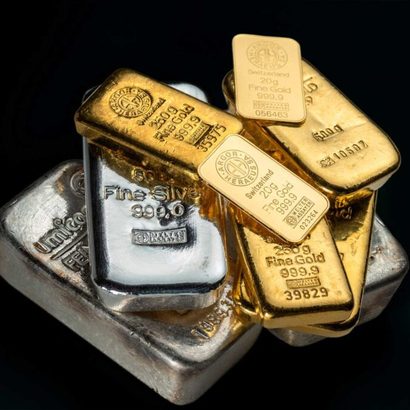
What is a Gold Bar?
A gold bar is a piece of refined gold, cast or minted into a standardized weight. It’s usually stamped with its purity, weight, refiner's name, and a serial number. Gold bars are made two main ways: cast bars, which are poured molten into a mold and have a rougher, more industrial look, and minted bars, which are cut from rolled gold sheet and stamped with a design, giving them a more polished, coin-like finish.
Unlike gold coins, which often carry a face value, historical design, or collector appeal, a gold bar's value is tied almost entirely to its weight and purity. That makes bars a straightforward way to buy or hold physical gold: what you're paying for is the metal itself, plus a manufacturing and dealer markup, rather than rarity or design history. For someone new to precious metals, gold bars are usually the simplest entry point because their value is easy to calculate at any given moment using the current spot price of gold.
How Much Does a Gold Bar Weigh?
Gold bars come in a wide range of weights, from tiny 1-gram bars smaller than a fingernail up to massive 400-ounce bars used in bank and central bank vaults. Most gold bars sold to individual buyers fall somewhere in between, commonly in gram-denominated sizes (1g, 5g, 10g, 20g, 50g, 100g) or ounce-denominated sizes (1 oz, 5oz, 10oz).
The weight stamped on a bar refers to its gold content. Knowing a bar's exact weight is the starting point for calculating its worth, since weight is multiplied by the current spot price to arrive at a baseline value before any dealer premium is added.
How Many Ounces are in a Gold Bar?
The number of ounces in a gold bar depends entirely on its size. A common 1-ounce gold bar contains exactly one troy ounce of gold. A 10-ounce bar contains ten troy ounces, and a kilo bar — one kilogram — contains approximately 32.15 troy ounces, since a kilogram is a slightly larger unit than a troy ounce.
It's worth noting that gold and silver are measured in troy ounces, not the standard "avoirdupois" ounces used for everyday items like food packaging. A troy ounce is about 10% heavier than a standard ounce (about 31.1 grams versus 28.35 grams), so converting between gram-denominated and ounce-denominated bars requires using the troy ounce conversion, not the everyday one. Getting this conversion wrong is a common beginner mistake that can lead to over or underestimating a bar's value by a meaningful margin.
How Much Gold is in a Gold Bar?
The amount of pure gold in a bar depends on both its stated weight and its purity, or "fineness." A standard 1-ounce investment-grade gold bar with .9999 fineness contains 99.99% pure gold, meaning essentially the entire stated weight is gold, with only a trace of other metals. This is different from gold jewelry, which is often 14K or 18K and contains a much lower percentage of actual gold mixed with other metals for durability.
To calculate the actual gold content of a bar, multiply its total weight by its fineness. A 1-ounce bar at .9999 fine contains 0.9999 troy ounces of pure gold. This is close enough to a full ounce that dealers and buyers treat it as one full troy ounce of gold for pricing purposes. Because investment-grade bars are made to such high purity standards, beginners generally don't need to worry about significant discrepancies between stated weight and actual gold content, unlike with gold jewelry or older gold coins.
What Does .9999 Fine Gold Mean?
".9999 fine" is a way of expressing gold purity as a decimal, meaning the metal is 99.99% pure gold, with only 0.01% made up of trace other elements. This is also sometimes called "four nines" gold or 24-karat gold, since 24 karats represents pure gold on the karat scale. It's the highest purity level commonly produced for investment-grade bullion, and it's the standard most major refiners, like PAMP Suisse and Credit Suisse, use for their bars.
Fineness matters because it directly determines how much actual gold you're getting for a given weight. A bar stamped .999 (three nines) is still extremely pure at 99.9%, but contains slightly less actual gold than an equivalent .9999 bar. Always check the fineness stamp on a gold bar before calculating its value, since even small differences in purity affect the math, and never assume a bar is .9999 fine without confirming it on the bar itself or its accompanying certificate.
What Are the Most Common Gold Bar Sizes?
The most commonly bought and sold gold bar sizes for individual investors are 1 gram, 5 grams, 10 grams, 1 ounce, 10 ounces, and 1 kilogram. Among these, the 1-ounce bar is the most popular single size in the United States, since it maps cleanly onto how gold prices are quoted (per troy ounce) and is balanced between affordability and liquidity.
Smaller bars, like 1-gram and 5-gram sizes, are popular as affordable entry points or gifts, though they typically carry a higher percentage markup over spot price because manufacturing costs are spread across less gold. Larger bars, such as 10-ounce and kilo bars, carry a lower percentage premium since fixed manufacturing costs are spread across more gold, making them more efficient for investors buying larger amounts.
How Is a Gold Bar's Value Calculated?
A gold bar's value starts with a simple formula: multiply its weight in troy ounces by the current spot price of gold, then adjust for its fineness. For example, a 1-ounce bar at .9999 fine, with gold trading around $4,600 per troy ounce, would have a raw gold value of roughly $4,599 . This is essentially the full spot price since the purity is so close to 100%.
From there, the price you'd actually pay to buy the bar, or receive to sell it, includes a premium above or below that raw calculation. Dealers add a markup to cover refining, minting, distribution, and their own margin when selling to you, and they typically buy back at a small discount below spot to cover their own costs and risk. Because gold prices change constantly during market hours, a bar's exact dollar value is really a moving target as the fineness and weight stay fixed, but the multiplier changes every time spot price moves.
Are Gold Bars Worth More than Gold Coins?
Not necessarily. Government-minted gold coins, like the American Gold Eagle or Canadian Gold Maple Leaf, typically carry a higher premium over spot price than bars of the same weight, because coins involve more intricate minting, legal tender status, and often stronger brand recognition and liquidity.
Gold coins may also be worth more due to numismatic or collector value. A gold coin that's rare, historically significant, or in exceptional condition can be worth substantially more than its gold content alone, the same way a rare Morgan silver dollar is worth more than its silver melt value. Gold bars almost never carry that kind of premium, since they're valued purely as bullion. For a beginner focused purely on accumulating gold at the lowest possible cost per ounce, bars are usually the better choice. On the other hand, for someone interested in collectibility or easier resale in small denominations, coins can have an edge.
How Can You Tell if a Gold Bar is Real?
Start with the basics: a genuine investment-grade gold bar will be stamped with its weight, fineness, and the refiner's name and logo. Reputable bars from major refiners like PAMP Suisse or the Perth Mint include a serial number that can be verified against the refiner's records or an accompanying assay certificate. If any of that information is missing, misspelled, or doesn't match the refiner's known branding, that's an immediate red flag.
Beyond visual inspection, weight and dimensions are a reliable first check, since counterfeiters often use lighter metals like tungsten inside a gold-plated shell to mimic a bar's appearance while cutting costs. A bar that's the right size but noticeably underweight on an accurate scale should raise suspicion. More advanced authentication methods include ultrasonic testing, X-ray fluorescence (XRF) analysis, and having the bar professionally weighed and measured against known specifications. For any bar of meaningful value, having it authenticated by a reputable dealer or professional before buying or selling is always worth the modest cost.
How Do You Sell Gold Bars?
Selling a gold bar is usually more straightforward than selling coins, since there's no collector value to evaluate. The sale mostly comes down to weight, purity, and current spot price. Reputable local coin and bullion dealers, precious metals exchanges, and some online bullion buyers will typically pay close to spot price, minus a small margin, for bars from well-known refiners with intact assay cards or serial numbers.
Before selling, it helps to get a couple of quotes rather than accepting the first offer, since dealer margins vary. Bars with broken assay seals or unclear provenance may sell for slightly less, since the buyer often needs to re-verify the gold content before reselling it. If you're located in Connecticut or the surrounding area, Haven Coin & Jewelry in Hamden is a licensed dealer rated 5.0 stars on Google that can weigh, test, and make a same-day offer on gold bars in person, which is often a faster and more transparent process than shipping a bar off to an online buyer sight unseen.
FAQ: Gold Bars
How much is a gold bar worth?
It depends on the bar's weight and purity multiplied by the current spot price of gold, plus or minus a dealer premium. A 1-ounce .999 fine bar tracks closely with the spot price of gold.
What size gold bar is easiest to sell?
Smaller, widely recognized sizes like 1-ounce and 1-gram bars from major refiners tend to be the easiest to sell, since more buyers can afford them and their value is simple to verify.
Are gold bars pure gold?
Most investment-grade bars are .999 or .9999 fine, meaning 99.9% to 99.99% pure gold. Extremely close to pure, but not mathematically 100%.
Where can I sell a gold bar?
Local coin and bullion dealers, precious metals exchanges, and reputable online bullion buyers are the main options. Getting multiple quotes helps ensure a fair price.
Written by
Matt Pavia
Founder & Owner, Haven Coin & Jewelry
Matt Pavia is a licensed Connecticut precious metals dealer, ANA member, and GIA-trained appraiser with 8 years of experience buying coins, gold, and jewelry. He founded Haven Coin & Jewelry in Hamden, CT in 2025 and is insured through Lloyd's of London.
About Matt & Haven Coin →Ready to get a professional evaluation? Visit us at 2285 Whitney Ave, Hamden CT or call (203) 717-4921.
Book Free Appointment