
How Much Is a Walking Liberty Half Dollar Worth? | Haven Coin
 By Matt Pavia · 2026-09-01 · 5 min read
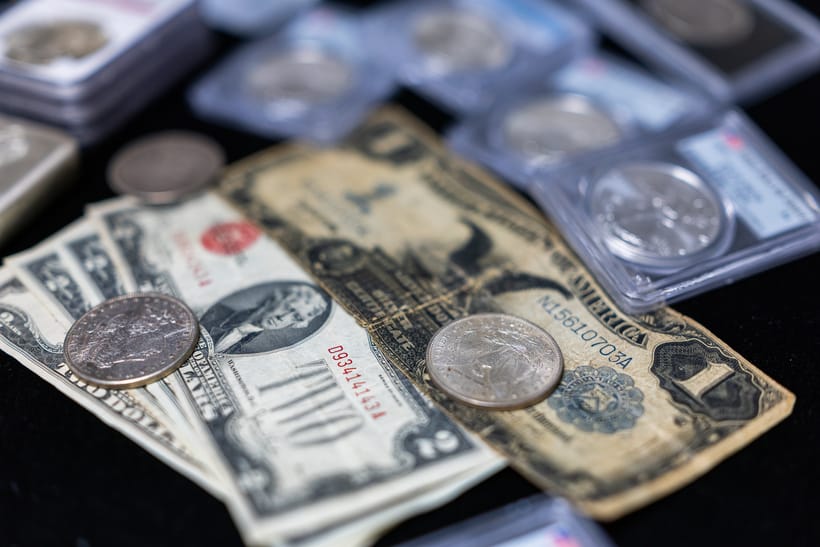
If you find an old half dollar in a drawer, would you spend it for 50 cents? You probably shouldn't—at least not before checking the date. Some half dollars contain real silver, some are valuable because collectors want a particular year or variety, and a few can be worth hundreds or even thousands of dollars.
The good news is that you do not need to be a coin expert to figure out what you have. A few simple clues—the year, the picture on the coin, a small mintmark, and the condition—can tell you a lot about its value.
What Is a Walking Liberty Half Dollar?
If your half dollar shows a woman walking toward a rising sun instead of a president, you probably have a Walking Liberty half dollar. The U.S. Mint produced these coins from 1916 through 1947. Sculptor Adolph A. Weinman designed both sides, placing Liberty on the front and an eagle perched on a rock on the back.
For beginners, one of the most important things to know is simple: every regular Walking Liberty half dollar contains silver. Each coin was made from 90% silver and 10% copper, weighed 12.5 grams when new, and contains about 0.3617 troy ounce of pure silver. As of September 2026, with silver around $64 per ounce, that silver alone is worth about $23, although the amount changes with the market price of silver. Prices move every trading day — you can check the live number anytime with our free calculator at meltcalculator.com.
When Were Half Dollars Made?
The United States has produced half dollars since the 1790s, but the types most people are likely to find today are much newer. Walking Liberty half dollars were made from 1916–1947, Franklin half dollars from 1948–1963, and Kennedy half dollars began in 1964. The metal changed along with the designs. Walking Liberty and Franklin halves were 90% silver, as was the first Kennedy half dollar in 1964. Kennedy halves dropped to 40% silver from 1965 through 1970, and regular issues became copper-nickel clad beginning in 1971.
Who is on the Half Dollar?
That depends on the type. Modern half dollars show President John F. Kennedy. The previous design showed Benjamin Franklin. The woman on the Walking Liberty half dollar is not a real historical person; she is a symbolic representation of Liberty. Simply recognizing the person or design on the front is one of the easiest ways to identify what kind of half dollar you have.
What makes a 1964 and 1971 Kennedy Half Dollar rare?
The important answer is that most of them are not rare. More than 430 million 1964 Kennedy half dollars were struck, so an ordinary example is valuable mainly because it contains 90% silver. However, special versions can be much scarcer. One example is the 1964 Accented Hair Proof, which has heavier hair detail above Kennedy's ear and was used on only a small portion of that year's proof coins.
A normal 1971 Kennedy half is also common and contains no silver.
However, certain 1971-D examples are collectible because of recognized doubled-die varieties, where parts of the design appear doubled.
How Much is the 1776-1976 Half Dollar Worth?
This is another coin that can look more valuable than it actually is. The double date “1776-1976” celebrates America's Bicentennial, and the back shows Independence Hall. Hundreds of millions of regular copper-nickel versions were produced, so an ordinary circulated example is generally worth around face value or only a small premium. NGC currently lists typical circulated Philadelphia and Denver examples around $0.75.
However, special 1976-S silver half dollars were also produced for collectors. These contain 40% silver and about 0.1479 troy ounce of pure silver, giving them additional metal value. That is why two Bicentennial halves with the same 1776-1976 date can be worth different amounts.
So What Is a Walking Liberty Half Dollar Worth?
There is no single answer. Its silver provides a base value, but date, mintmark, condition, and collector demand can push the price much higher. As one example, NGC currently values common circulated 1943 Walking Liberty halves at roughly the mid-$20 range, while uncirculated examples can climb much higher.
That is why checking the coin before treating it simply as silver matters.
Which Dates Are Most Valuable?
The first date a beginner should learn is the 1921-D. Only 208,000 were struck, making it the lowest-mintage regular Walking Liberty half dollar. The 1921 and 1921-S are also key issues collectors look for, while dates such as the 1938-D are much scarcer than many of the common 1940s coins.
This does not mean every old-looking Walking Liberty half dollar is rare. Many were produced in large numbers. The point is that a quick check of the date can separate a common silver coin from one that deserves much more research.
What Do the Mint Marks Mean?
A mintmark is the small letter showing where the coin was made. A D means Denver, an S means San Francisco, and no mintmark on a Walking Liberty half generally means Philadelphia.
Finding the letter can be a little tricky. On 1916 and some 1917 Walking Liberty halves, the mintmark is on the front, beneath “IN GOD WE TRUST.” During 1917 it was moved to the back, slightly above and to the left of the word “HALF,” where it remained for the rest of the series. A tiny letter may not seem important, but on the right coin it can make a major difference in value.
Are All Walking Liberty Half Dollars Made of Silver?
Yes. Unlike Kennedy half dollars, where the composition depends on the year, every genuine Walking Liberty half dollar from 1916 through 1947 was struck in 90% silver.
How to Sell Walking Liberty Half Dollars
Start by doing one thing: do not clean them. A dark or worn coin may not look impressive, but cleaning can damage its original surface and hurt any collector value it has.
Before selling, check the date and mintmark and keep any unusual or better-looking coins separate. A common Walking Liberty half dollar may be worth mainly its silver value plus a small collector premium, while a scarce date can be worth far more. If you are unsure what you have, getting the coins evaluated before accepting an offer can help prevent a valuable piece from being treated as ordinary silver.
For those in Connecticut or the surrounding Northeast, Haven Coin & Jewelry in Hamden is a licensed dealer rated 5.0 stars on Google that buys Walking Liberty half dollars and other silver coins. Haven works with both experienced collectors and people who may have inherited coins and know very little about them, providing free evaluations and offers based on the current market.
An old half dollar is a good example of why you should never judge a coin by the number stamped on it. Fifty cents may be its face value, but its real value can come from the silver inside, how few were made, where it was produced, or how well it survived over the years.
For someone new to coins, you do not need to memorize every rare date or grading term. Start with the basics: identify the design, check the year and mintmark, and resist the temptation to clean it. Those few steps can quickly separate an ordinary coin from one that deserves a much closer look.
Sometimes a half dollar is worth its silver. Other times, one small detail can make it worth far more. That is what makes old coins special: something once spent as ordinary money can become something worth saving, studying, and passing on.
FAQ: Walking Liberty Half Dollars
Are Walking Liberty half dollars worth money?
Yes. Every Walking Liberty half dollar contains silver, and rare dates or better-condition examples can be worth considerably more.
How much silver is in a Walking Liberty half dollar?
About 0.3617 troy ounce of pure silver.
What is the rarest Walking Liberty half dollar?
The 1921-D has the lowest regular-issue mintage, with only 208,000 produced.
How much is a Walking Liberty half dollar worth?
Common circulated examples are generally worth at least their silver value plus some collector premium. Rare dates and high-grade coins can be worth much more.
Written by
Matt Pavia
Founder & Owner, Haven Coin & Jewelry
Matt Pavia is a licensed Connecticut precious metals dealer, ANA member, and GIA-trained appraiser with 8 years of experience buying coins, gold, and jewelry. He founded Haven Coin & Jewelry in Hamden, CT in 2025 and is insured through Lloyd's of London.
About Matt & Haven Coin →Ready to get a professional evaluation? Visit us at 2285 Whitney Ave, Hamden CT or call (203) 717-4921.
Book Free Appointment