
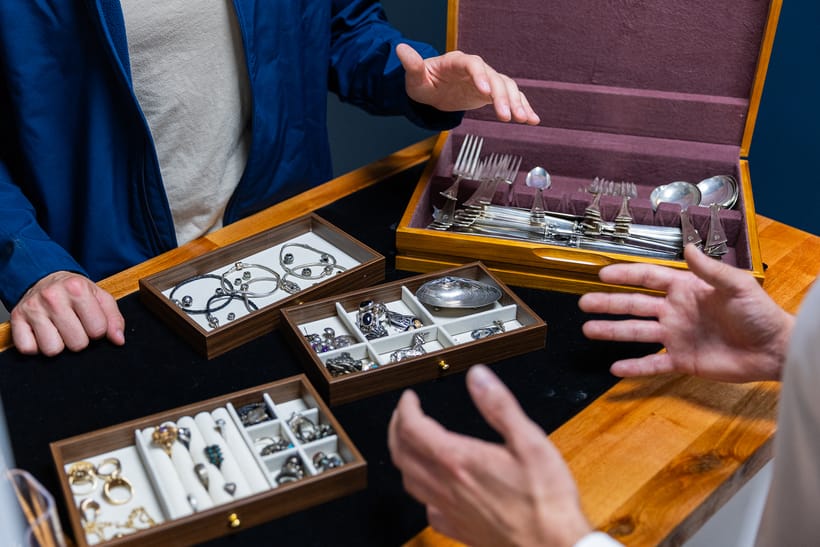
When someone calls us asking what their silver is worth, the first thing we explain is the difference between spot price and melt value — because confusing the two is the most common reason sellers leave money on the table. Here's what you actually need to know before selling any silver.
What Is Melt Value?
Melt value is the intrinsic worth of the silver content in an item based on current spot price. Spot price represents the going rate for one troy ounce of pure silver on the commodities market. This price fluctuates constantly throughout the trading day.
To calculate melt value, dealers determine how much pure silver an item contains and multiply that by the current spot price. A pre-1965 U.S. quarter contains 0.18084 troy ounces of pure silver. With silver around $64 per ounce as of September 2026, that quarter's melt value is approximately $11.57.
Why You Usually Get Less Than Melt Value
Most buyers pay slightly less than full melt value for common silver items. This difference accounts for refining costs, business overhead, and market risk. Precious metals dealers must process, test, and eventually resell or refine the silver, all of which involve costs.
What you receive depends on the form of silver you're selling. Pure silver bullion bars or rounds typically fetch closer to spot price. Sterling silver flatware, which is only 92.5% pure and requires more processing, often brings less than bullion. Silver jewelry, especially pieces with complex designs or stones that must be removed, may receive slightly less.
When Silver Is Worth More Than Melt Value
Not all silver sells for just melt value. Numismatic coins — those with collector value based on rarity, condition, or historical significance — can be worth multiples of their silver content. A common Morgan silver dollar might be worth about $50 based on silver content, but a rare date in excellent condition could be worth $500 or more. Prices move every trading day — you can check the live number anytime with our free calculator at meltcalculator.com.
Antique sterling silver pieces, especially those with maker's marks from renowned silversmiths, often carry premiums above melt value. A Victorian sterling tea set might be worth twice its melt value to collectors of antique silver.
How Spot Price Affects What You Receive
Spot price changes constantly. Silver traded at $64 per ounce last month might be $62 this month and $66 next month. When you sell matters. Some sellers watch the silver market and wait for favorable pricing. Others prefer to sell regardless of minor fluctuations.
Reputable dealers quote prices based on real-time spot price, not outdated numbers. Ask your dealer to show you the current spot price from a recognized source like Kitco or Monex. This transparency ensures you're receiving fair value based on actual market conditions.
Questions to Ask Before Selling Silver
Before accepting an offer, ask the dealer to show you the current spot price and walk you through their calculation. If a dealer refuses to explain their math or won't show you the current spot price, that's a red flag. Professional dealers should be willing to break down exactly how they arrived at their offer.
Ask whether the dealer checked for numismatic value. At Haven Coin & Jewelry, we always check silver coins for rare dates and mint marks before offering a price — some silver coins are worth far more than melt value, and honest dealers will point this out rather than simply paying bullion prices for valuable collector coins.
Understanding Connecticut Requirements
Connecticut law requires precious metals dealers to be licensed and follow specific transaction procedures. These regulations protect sellers by ensuring proper documentation and creating accountability. When selling silver in Connecticut, dealers must provide detailed receipts showing what was purchased, the price paid, and other transaction details. For a full breakdown of how these laws work, see our guide to Connecticut precious metals laws.
Payment for precious metals in Connecticut must be made by check rather than cash — this is a consumer protection measure designed to prevent fraud and create a paper trail. While getting a check instead of immediate cash might feel inconvenient, this requirement actually protects you as a seller.
Common Silver Items and What to Expect at Sale
| Item | Silver Content | Typical Offer |
|---|---|---|
| Silver bullion bars/rounds | .999 pure | Priced near spot |
| American Silver Eagles | .999 pure (1 oz) | Spot + small premium |
| Pre-1965 U.S. coins (junk silver) | 90% silver | Priced from live spot — the math shown on every offer |
| Sterling silver flatware | 92.5% silver | Priced from live spot — the math shown on every offer |
| Silver jewelry | Varies (test required) | Priced from live spot — the math shown on every offer |
What to Bring When Selling Silver
- All silver items — bars, coins, flatware, jewelry
- Original packaging or certificates if available
- Valid government-issued photo ID (required by Connecticut law)
- Any documentation of purchase or provenance for high-value pieces
Frequently Asked Questions
Why does a dealer offer less than full spot price?
Dealers must cover testing, processing, and eventual resale costs. Our offers are calculated in front of you from the live spot price, your items' exact weight, and their tested purity — we show you the math on every offer, and evaluations are always free.
How do I know what the current silver spot price is?
Check any major financial site such as Kitco, CNBC Markets, or Google Finance. Spot prices update throughout the trading day. Ask your dealer to show you the current price from a recognized source at the time of your visit.
Does it matter if my silver is tarnished?
No. Tarnish is surface oxidation and does not affect the silver content. Do not clean or polish silver before selling — it makes no difference to the offer and can actually damage collectible pieces.
Can common silver coins ever be worth more than melt?
Yes. Some dates and mint marks within common series are rare and carry collector premiums far above their silver content. A reputable dealer checks numismatic value alongside melt value on every coin. If you're ready to sell silver in Connecticut, you can visit our coin shop in Hamden — we serve sellers from across New Haven County including New Haven, North Haven, and Wallingford.

Written by
Matt Pavia
Founder & Owner, Haven Coin & Jewelry
Matt Pavia is a licensed Connecticut precious metals dealer, ANA member, and GIA-trained appraiser with 8 years of experience buying coins, gold, and jewelry. He founded Haven Coin & Jewelry in Hamden, CT in 2025 and is insured through Lloyd's of London.
About Matt & Haven Coin →Ready to get a professional evaluation? Visit us at 2285 Whitney Ave, Hamden CT or call (203) 717-4921.
Book Free Appointment