
Silver / Market Outlook
Is There Really a Silver Shortage? A 6th Straight Deficit Is Forecast

A shortage is easy to picture. The shelf is empty, the product is gone, and nobody can get more. Silver is more complicated than that. You can walk into a coin shop and see silver bars, rounds, and old coins for sale while the global silver market is still running short. Both things can be true at the same time.
Is Silver Really in Short Supply?
According to the Silver Institute’s April World Silver Survey 2026, global silver demand has exceeded supply every year since 2021. The market recorded a 40.3 million-ounce deficit in 2025, its fifth straight annual shortfall, and the survey forecast another 46.3 million-ounce deficit in 2026. If that forecast holds, silver will have been in deficit for six consecutive years. That does not mean the world has run out of silver. It means that during a given year, newly available supply is not enough to cover all the silver being used and purchased, so the difference has to come from silver that was already above ground.
November 12 update: The Silver Institute’s newer interim forecast puts the 2026 deficit at 35 million ounces and the cumulative 2021–2026 shortfall at approximately 746 million ounces. These remain estimates; the April figures below explain the earlier survey’s outlook.
The remaining gap can be filled from existing inventories, including vault stocks and metal released by investors; recycling is already included in the survey’s annual supply figure. In that sense, a silver deficit is a little like spending more money than you earn while still having savings in the bank. You can cover the gap for a while, but the reserve gets smaller each time. The recent deficits have been substantial. Based on the Silver Institute’s April figures, the annual shortfalls from 2021 through 2025 add up to roughly 716 million ounces. The size has changed from year to year, with an especially large deficit of about 254 million ounces in 2022, followed by 200.1 million in 2023, 137.9 million in 2024, and 40.3 million in 2025.
Why Can’t Mines Quickly Produce More Silver?
One reason silver supply cannot respond instantly is the unusual way the metal is mined. Most silver does not come from mines whose main product is silver. In 2025, only about 26% of global mine production came from primary silver mines. The rest was produced as a byproduct while companies were mainly mining metals such as lead, zinc, copper, and gold. Lead and zinc mines produced about 249.1 million ounces of silver in 2025, copper mines produced about 237.3 million ounces, and gold mines contributed roughly 134.7 million ounces.
That makes silver different from a commodity where producers can simply increase output because the price went up. If a copper mine also produces silver, its decision to expand usually depends more on the economics of copper than on silver alone. The same is true for many lead, zinc, and gold mines. Higher silver prices can encourage new projects, more recycling, and investment in primary silver mines, but bringing new production online can take years.

How Much Silver Does Solar Power Use?
On the demand side, solar power has become one of the biggest users of silver. Solar cells use the metal because silver conducts electricity extremely well. In 2025, photovoltaic manufacturing consumed about 186.6 million ounces of silver worldwide. That is a huge amount for one industry, but solar demand also shows how quickly manufacturers can adapt when a metal becomes expensive.
Solar companies have been finding ways to use less silver in each cell, a process often called thrifting, while some are experimenting with substitutes such as copper. Photovoltaic silver demand reached about 197.5 million ounces in 2024, then fell to 186.6 million in 2025. The Silver Institute’s April survey forecast another decline to roughly 151 million ounces in 2026. In other words, solar installations can keep growing even while the amount of silver used per panel falls.
Other technologies still consume large amounts of silver. Cars, electronics, power grids, data centers, and artificial-intelligence infrastructure all contribute to industrial demand. Overall industrial silver demand reached 657.4 million ounces in 2025 and was forecast in April at roughly 639.6 million ounces in 2026. So while solar manufacturers are using less silver per unit, industrial demand across the broader economy remains significant.
Did China Ban Silver Exports?
China also became part of the silver-shortage conversation heading into 2026, although some headlines made the situation sound more dramatic than it really was. China did not simply ban silver exports. Instead, the country continued a state-trading system that restricts silver exports to approved companies. For 2026 and 2027, China’s Ministry of Commerce named 44 companies authorized to export silver, which was actually two more approved exporters than in 2025.
China had already used a licensing system for silver exports for years, so the 2026 rules were not a sudden shutdown. Still, the announcement drew attention because China is a major silver producer, refiner, consumer, and exporter. Mainland China exported a record 162 million ounces of silver in 2025. The World Silver Survey 2026 noted that reports of tighter Chinese export rules added to market concerns, although those fears later eased.
A Global Deficit Is Not the Same as Empty Dealer Shelves
This is where the word shortage can become misleading. A global market deficit is not the same thing as a shortage of silver coins or bars at your local dealer. Retail products have to be refined, turned into blanks or bars, minted, packaged, shipped, and distributed. If demand for American Silver Eagles suddenly surges, dealers can run low on Eagles even if large wholesale silver bars are still available elsewhere.
The reverse can happen too. The global silver market can remain in an annual deficit while local coin shops have plenty of bars, rounds, and old silver coins in stock. Location, product type, and timing all matter. That difference often shows up in the premium, which is the amount a physical silver product sells for above the spot price of the metal itself.
When buyers rush into physical silver and dealer inventories tighten, premiums can rise even if the spot price barely changes. When shops have plenty of inventory and demand cools, premiums can shrink. That is why a six-year global deficit does not automatically mean every silver Eagle or one-ounce round will carry a huge premium.
What Does a Silver Deficit Mean for Sellers?
For someone thinking about selling silver, the deficit is useful background, but it does not tell you what silver will be worth next week or next year. A supply deficit can put pressure on inventories over time, but prices also react to interest rates, the U.S. dollar, investment demand, industrial demand, recycling, economic conditions, and the amount of silver already sitting above ground.
The better starting point is figuring out what you actually own. A one-ounce bullion round is different from sterling flatware. A bag of common 90% silver coins is different from a rare Morgan dollar. A certified collectible coin may be worth much more than its silver content. Check dates and mintmarks before treating old coins as ordinary silver, and do not clean them.
For bullion or other silver valued mainly for its metal content, check the live silver price on Kitco. The starting metal value comes from the weight, purity, and current spot price. A dealer’s offer can still differ depending on the product, condition, current demand, collector value, and the resale or refining market.
Selling Silver in Connecticut
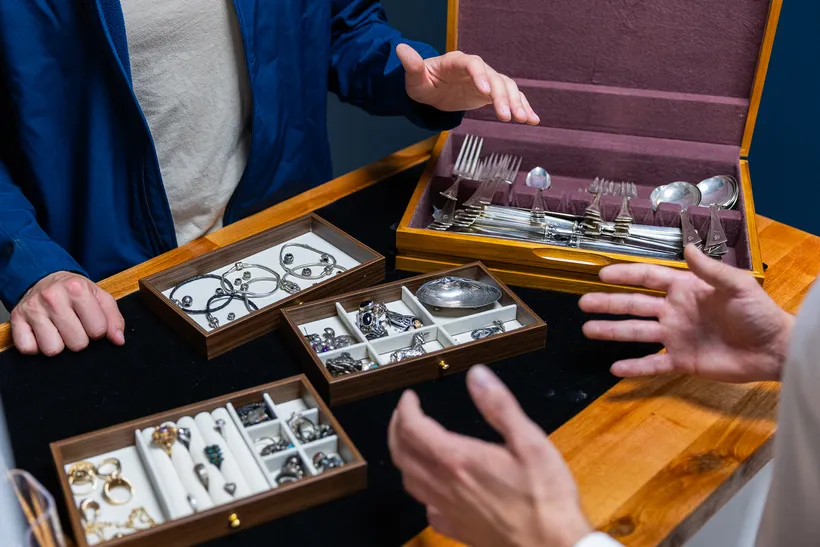
For anyone in Connecticut or the surrounding area, Haven Coin & Jewelry at 2285 Whitney Ave in Hamden buys silver coins, bullion bars and coins, sterling silverware, jewelry, and full collections. Evaluations are free, in person, and there is no obligation to sell. Items are tested and weighed in front of the customer and priced individually against live market information. Customers are also given a written figure to keep.
Walk-ins are welcome Tuesday–Friday from 10am–5pm and Saturday from 10am–2pm. For a larger collection, call (203) 717-4921 to arrange an appointment.
A Deficit Does Not Mean the World Has Run Out
The silver market has been using more newly available metal than it has been supplying for years, and that is worth paying attention to. But an annual deficit is not an empty vault, and it is not a promise about tomorrow’s price. The gap is being filled by drawdowns of existing silver inventories after mine output and recycling have been counted in annual supply. With a sixth deficit year forecast, the real question is not whether silver still exists. It is how much of that existing supply the market has to keep reaching for.
FAQ: Silver Shortage
Is the world running out of silver?
No. Silver still exists in mines, inventories, bullion, jewelry, industrial products, and recyclable material. The current issue is a supply deficit: annual demand has been exceeding newly available supply.
Why is silver in short supply?
Demand comes from investment, electronics, solar, vehicles, power infrastructure, jewelry, and other uses. Most silver is also produced as a byproduct of mining other metals, which makes supply slower to respond directly to silver prices.
Will a silver shortage raise prices?
A tight market can contribute to higher prices or premiums, but it does not guarantee them. Silver prices also depend on interest rates, the dollar, investment demand, industrial demand, inventories, recycling, and other market forces.
What is the silver deficit?
A silver deficit occurs when total annual demand is greater than total annual supply, including recycling. The April World Silver Survey 2026 forecast a 46.3 million-ounce deficit for 2026; the Silver Institute’s November 12 update lowered that forecast to 35 million ounces, still a sixth consecutive deficit year if realized.
Written by
Matt Pavia
Matt Pavia is a licensed Connecticut precious metals dealer, ANA member, and GIA-trained appraiser with 8 years of experience buying coins, gold, and jewelry. He founded Haven Coin & Jewelry in Hamden, CT in 2025 and is insured through Lloyd's of London.
About Matt & Haven CoinVisit Haven in Hamden
Know what you have.
Understand what it’s worth.
Ready to get a professional evaluation? Visit us at 2285 Whitney Ave, Hamden CT or call (203) 717-4921.
Book Free Appointment Hours & directions