
What Does 14K Mean on a Gold Ring?
The "14K" stamp on a gold ring refers to its karat weight, a measurement of gold purity based on a 24-part scale, where 24 karats represents pure, 100% gold. A 14-karat ring is made up of 14 parts pure gold and 10 parts other metals, typically copper, silver, zinc, or nickel, which are alloyed in to add strength, durability, and sometimes color variation, like the pinkish tint of rose gold.
This makes 14K one of the more common purity levels for everyday jewelry in the United States, striking a practical balance between gold content and durability. Pure 24K gold is quite soft and prone to scratching and bending, while 14K holds up much better to daily wear. Rings are also commonly found in 10K, 18K, and 22K, each representing a different ratio of gold to other metals, so checking the karat stamp is always the essential first step before estimating a ring's value.
How Much Pure Gold Is in 14K Gold?
Since 14K gold means 14 out of 24 parts pure gold, doing the math (14 ÷ 24) shows that 14K gold is approximately 58.3% pure gold by weight, with the remaining 41.7% made up of other alloyed metals. This percentage is fixed by definition. Any ring stamped 14K, regardless of style or manufacturer, contains this same proportion of pure gold.
Knowing this percentage is the key to calculating a 14K ring's actual gold value: you simply multiply the ring's total weight by 58.3% to find how much pure gold it contains, then multiply that figure by the current price of gold. This is different from an 18K ring, which is about 75% pure gold, or a 10K ring, which is about 41.7% pure gold. This means a 14K ring will always be worth meaningfully less in raw gold content than an 18K ring of the identical weight, and meaningfully more than a 10K ring of the same weight.

How Much Is a 14K Gold Ring Worth?
A 14K gold ring's value starts with its raw gold content: multiply the ring's weight by 58.3% (its gold purity) and then by the current spot price of gold. With gold trading around $4,465 per troy ounce as of early September 2026, a typical 5-gram 14K ring would contain roughly 2.9 grams of pure gold, worth approximately $420 in raw gold value before any dealer discount or design premium is applied.
In practice, a dealer buying a 14K ring purely for its scrap gold content will typically offer somewhat less than this raw calculation, since refining costs and profit margin get factored in. Our offers are calculated in front of you from the live spot price, your items' exact weight, and their tested purity — we show you the math on every offer, and evaluations are always free. A ring with notable design, brand recognition, or gemstones can be worth considerably more than its scrap value alone, which is why weight and karat are only the starting point, not the final word, on a specific ring's worth.
How Is a 14K Gold Ring Valued?
Valuing a 14K gold ring starts with two fixed numbers: its weight, measured on an accurate scale, and its purity, confirmed by the karat stamp or a professional testing method. Multiplying these together against the current spot price of gold gives the ring's baseline scrap or melt value.
From that baseline, additional factors can raise a ring's value beyond pure scrap pricing: recognizable designer or brand markings, exceptional craftsmanship, vintage or antique status, and any gemstones set in the ring. A plain, unbranded 14K band will typically be valued close to its scrap gold content, while a ring from a well-known jewelry house or with unique, sought-after styling can be worth considerably more to the right buyer. This is why a proper valuation usually involves both a straightforward gold-content calculation and a separate assessment of the ring's design and craftsmanship.
How Much Is a 10K Gold Ring Worth?
A 10K gold ring follows the same basic valuation formula as 14K, but with a lower gold percentage: 10K gold is about 41.7% pure gold (10 ÷ 24), meaning a 10K ring contains meaningfully less actual gold than a 14K ring of the same weight. Using the same $4,465 per troy ounce spot price, a 5 gram 10K ring would contain roughly 2.1 grams of pure gold, worth approximately $300 in raw gold value.
10K is the lowest karat commonly used in fine jewelry in the U.S. and is popular specifically because it's more affordable and slightly more durable than higher-karat gold, due to its higher proportion of harder alloy metals. For a beginner comparing rings of similar size and style, the karat stamp alone can explain a significant price difference. A 10K and 14K ring that look nearly identical can differ in raw gold value by roughly 30% simply due to their different purity levels.
Does the Design Affect Scrap Gold Value?
When a ring is being sold purely for scrap, meaning it will be melted down and refined rather than resold as jewelry, design generally does not affect its value. Scrap buyers are paying for the ring's gold content alone, so an ornate, hand-engraved ring and a plain, simple band of the identical weight and karat will receive the same scrap offer, since the melting process erases any design entirely.
Design becomes relevant only when a ring has additional value beyond its raw gold content. For instance, it may be from a recognizable luxury brand, features exceptional or unusual craftsmanship, or has collectible or antique appeal. In those cases, a buyer interested in reselling the ring as jewelry, rather than melting it down, may pay a premium well above scrap value to preserve and resell the piece intact. For a beginner deciding whether to sell a ring for scrap or seek a specialized buyer, it's worth having a knowledgeable jeweler assess whether the design itself carries meaningful extra value before assuming it's worth only its gold content.
Do Gemstones Increase the Value of a Gold Ring?
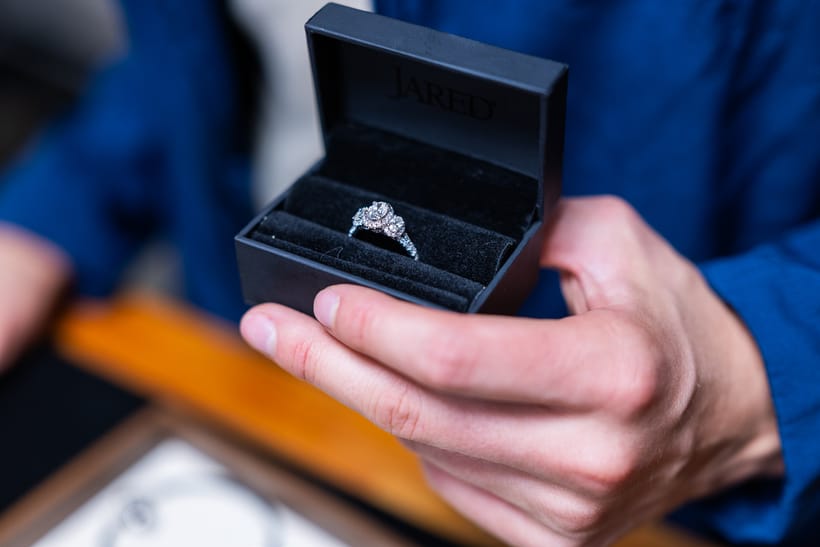
Gemstones can meaningfully increase a ring's overall value, but they're valued completely separately from the gold itself. A jeweler or appraiser will typically calculate the gold content's worth using weight, karat, and spot price, then separately assess any gemstones based on factors like carat weight, cut, clarity, and color.
It's important to know that a scrap gold buyer, someone interested only in melting the ring down for its metal, generally either removes and returns the stones to the seller or pays little to nothing extra for them. This is because gemstones have no value in a melt calculation and are typically discarded or lost in the refining process. A ring with a genuine diamond, sapphire, or other valuable gemstone should generally be evaluated by a jeweler who can assess the stone properly, rather than sold to a pure scrap-gold buyer who won't account for it. The difference in total value can be substantial depending on the stone's size and quality.
How Can You Test a 14K Gold Ring?
The most basic test for confirming a ring's karat is checking for a stamp, usually a small marking like "14K" or "585" (the European decimal equivalent of 14K, since 14 ÷ 24 rounds to .585) somewhere on the band, typically on the inside. A stamp alone isn't a complete guarantee of authenticity, though, since it can be applied to a base-metal ring fraudulently.
More reliable testing methods include an acid test, where a small scratch of the metal is exposed to different acid solutions calibrated to specific karats, and electronic gold testers, which measure electrical conductivity to estimate purity without damaging the piece. Professional jewelers and dealers also use X-ray fluorescence (XRF) machines for a fast, non-destructive purity reading. For anyone uncertain about a ring's authenticity or exact karat, having it tested by a reputable jeweler or dealer is far more reliable than relying on a stamp alone, especially for older or unmarked pieces.
How Do You Sell a 14K Gold Ring?
Selling a 14K gold ring starts with an accurate weighing and karat confirmation, ideally from a source other than the buyer themselves, so you have an independent sense of the ring's baseline scrap value before hearing any offers. It's also worth considering whether the ring has design, brand, or gemstone value beyond its gold content, since that changes which type of buyer is likely to offer the best price.
Getting quotes from more than one buyer is one of the simplest ways to ensure a fair price, since scrap gold margins can vary noticeably between dealers. If you're located in Connecticut or the surrounding area, Haven Coin & Jewelry in Hamden is a licensed dealer rated 5.0 stars on Google that can weigh, test, and evaluate a 14K gold ring in person, including any gemstones or design value beyond scrap pricing, which is often the most straightforward way to get a fair, transparent offer without shipping jewelry off sight unseen.
FAQ: 14K Gold Rings
How much is a 14K gold ring worth?
It depends on weight and current gold prices. As a rough example, a 5-gram 14K ring contains about 2.9 grams of pure gold, worth roughly $420 at recent spot prices, before any design or gemstone value is added.
How much gold is in 14K jewelry?
14K gold is approximately 58.3% pure gold by weight, with the remaining 41.7% made up of other alloyed metals.
Does the weight of a gold ring matter?
Yes. Weight is one of the two core factors, along with karat, used to calculate a ring's raw gold content and baseline value.
Where can I sell a 14K gold ring?
Local jewelers, coin and bullion dealers, and reputable buyers specializing in gold and jewelry are the main options; getting multiple quotes helps ensure a fair price.

Written by
Matt Pavia
Founder & Owner, Haven Coin & Jewelry
Matt Pavia is a licensed Connecticut precious metals dealer, ANA member, and GIA-trained appraiser with 8 years of experience buying coins, gold, and jewelry. He founded Haven Coin & Jewelry in Hamden, CT in 2025 and is insured through Lloyd's of London.
About Matt & Haven Coin →Ready to get a professional evaluation? Visit us at 2285 Whitney Ave, Hamden CT or call (203) 717-4921.
Book Free Appointment