
What to Do When You Inherit a Coin Collection: A Step-by-Step Guide
 By Matt Pavia · 6 min read
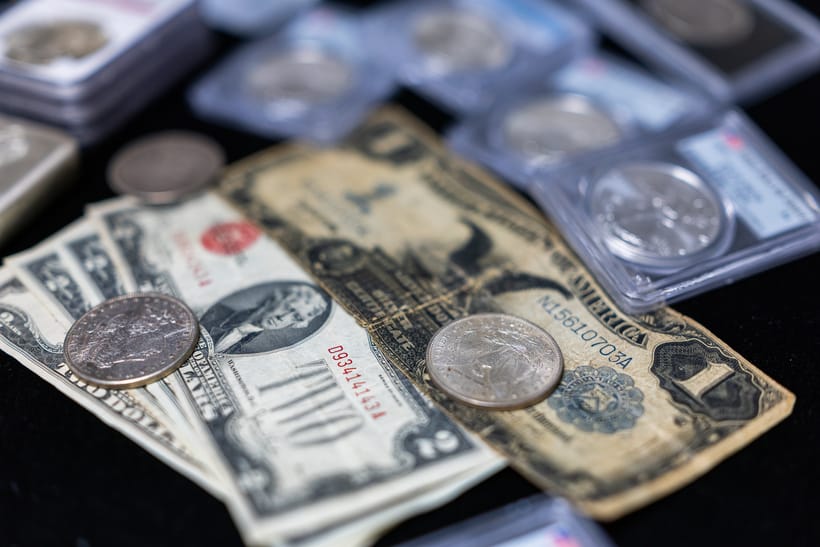
Inheriting a coin collection often comes with two feelings at once — a sense that something valuable has been passed down, and genuine uncertainty about what to do next. Coins are not like other inherited items. Their value isn't obvious, their condition matters enormously, and the wrong move — like cleaning them — can permanently destroy that value. This guide walks Connecticut families through exactly what to do, step by step, from the moment you discover a collection to the moment you decide what to do with it.
Step 1 — Don't Touch, Clean, or Reorganize Anything
This is the most important step, and it comes before everything else. Before you do anything with an inherited coin collection, stop.
Do not clean the coins. Do not polish them. Do not wipe them with a cloth. Do not wash them. Cleaning coins — even gently, even with water — destroys the original surface and can reduce their value by 50 to 90 percent. A tarnished Morgan dollar in original condition can be worth $200 or more. The same coin after cleaning can drop to $20.
Do not throw anything away. Coins that look like common pennies can be rare key dates worth hundreds of dollars. Old paper currency, proof sets in damaged boxes, and foreign coins with no obvious value can all carry significant worth. Keep everything until a professional has looked at it.
Step 2 — Keep Everything Together
Many inherited coin collections come with related items that add context and value — original mint packaging, certificates of authenticity, old receipts, storage folders, and albums. Keep all of it together.
Coin albums and holders often tell a story about the collection — what the original owner was focused on, which coins they considered important, and how they stored everything. A coin still in its original government-issued packaging is almost always worth more than the same coin loose.
Step 3 — Make a Basic Inventory
Before your evaluation appointment, do a simple count of what you have. You don't need to know what anything is worth — just note roughly how many coins there are, whether there are any folders or albums, whether there's any paper currency, and whether anything is in special packaging or holders.
This helps your evaluator set aside the right amount of time and ensures nothing gets missed. Our free coin appraisals welcome walk-ins, and appointments are recommended for large collections so we can give everything the time it deserves.
Step 4 — Get a Professional Evaluation Before Making Any Decisions
Once you have everything together, get a free professional evaluation from a licensed Connecticut coin dealer before you decide anything. Do not sell to the first buyer you find. Do not accept an offer from someone who comes to your door. Do not list coins on eBay without knowing what you have first.
A professional evaluation gives you a baseline — what the collection is actually worth, what the most valuable pieces are, and what your realistic options are. At Haven Coin & Jewelry in Hamden, we offer free evaluations with no obligation to sell. We walk you through every piece, explain what it is in plain language, and give you time to make the right decision. For more on the full process of how to sell an inherited coin collection in Connecticut, we've covered every step in detail.
Step 5 — Understand Your Options
After your evaluation you'll have a clear picture of what you have. At that point your options are straightforward:
- Sell the entire collection — the simplest option, particularly for families who don't collect coins and want a fair, same-day payment
- Keep the most valuable pieces — some families choose to hold onto rare or sentimental coins and sell the rest
- Hold for now — if precious metals prices are low, some sellers choose to wait. A good dealer will tell you honestly when market timing matters
- Donate or gift — some inherited collections have more sentimental than monetary value and are better passed along to other family members or donated
There is no wrong answer. The point of a professional evaluation is to give you the information you need to make the right choice for your situation.
What Connecticut Families Often Find
The most common inherited coin collections in Connecticut include Morgan and Peace silver dollars from the early 20th century, wheat pennies from the 1910s through 1950s, old paper currency and silver certificates, and proof and mint sets from the 1960s and 70s. Many also include foreign coins collected during travel, pre-1933 U.S. gold coins, and vintage jewelry mixed in with the coins.
Most collections contain a mix of common coins worth near melt value and a smaller number of pieces worth significantly more. The key is knowing which is which — and that requires a professional eye. Our guide on how much is my grandfather's coin collection worth goes deeper on the specific coins that most commonly carry surprise value.
One Thing to Avoid Entirely
Do not take an inherited coin collection to a pawn shop for your first evaluation. Pawn shops are generalist buyers — they deal in everything from electronics to jewelry to tools. Coins are a specialty, and rare numismatic value is rarely captured in a pawn shop offer. You will almost always receive a better offer from a dedicated coin dealer who evaluates numismatic value alongside melt value.
If the collection includes gold coins specifically, read our guide on how to avoid getting lowballed when selling inherited gold coins — the same principles apply but the stakes are higher given the value involved.
Inheriting a coin collection is one of the more meaningful things that gets passed down in a family. Taking the right steps — keeping everything together, not cleaning anything, and getting a professional evaluation from a licensed Connecticut dealer — ensures you honor that inheritance properly. If you're ready to find out what you have, Haven Coin & Jewelry in Hamden is here to help. We handle inherited collections every week and treat every one with the care it deserves.
Where to Sell an Inherited Collection — Your Options
| Option | Best For | Watch Out For |
|---|---|---|
| Licensed local coin dealer | All collections — best for numismatic value | Verify CT license before selling |
| Pawn shop | Quick cash on common bullion only | Rarely evaluates numismatic value |
| Online auction (eBay) | Rare key-date singles you've already identified | Requires expertise to list accurately; fees apply |
| Estate sale company | Furniture and household goods | Coins routinely undervalued; 30–40% commission |
Frequently Asked Questions
How do I know if the collection is worth a lot or just a little?
You won't know until a professional evaluates it — and neither will anyone else without handling and examining the coins. The only way to find out is a free evaluation from a licensed dealer who checks both melt value and numismatic value.
What if there are also old paper bills or silver certificates in the collection?
Bring them. Old paper currency — especially silver certificates, gold certificates, and pre-Federal Reserve notes — can have collector value beyond face value. Keep everything together and let a professional assess it all.
Can I sell part of the collection and keep the rest?
Yes. Many families choose to keep sentimental or especially rare pieces and sell the rest. A good evaluation gives you the information to make that decision with confidence.
Do I need to file anything with the estate for the coin collection?
If the estate is going through probate, assets including coin collections typically need to be inventoried and valued. A written offer from a licensed dealer can serve as documentation for estate purposes. If you're in New Haven County, Haven Coin & Jewelry serves families from North Haven, Cheshire, Wallingford, and across the region. For the full guide on selling an inherited collection, see our page on selling inherited coins in Connecticut.
Written by
Matt Pavia
Founder & Owner, Haven Coin & Jewelry
Matt Pavia is a licensed Connecticut precious metals dealer, ANA member, and GIA-trained appraiser with 8 years of experience buying coins, gold, and jewelry. He founded Haven Coin & Jewelry in Hamden, CT in 2025 and is insured through Lloyd's of London.
About Matt & Haven Coin →Ready to get a professional evaluation? Visit us at 2285 Whitney Ave, Hamden CT or call (203) 717-4921.
Book Free Appointment